

Connect Adyen to circuly
Introduction
To enable secure and seamless payment processing in your circuly-powered subscription store, you need to connect a Payment Service Provider (PSP). Adyen is one of the supported PSPs in circuly and can be fully integrated through the circuly Hub.
This article walks you through the step-by-step process of connecting your Adyen account to circuly. Once connected, Adyen will handle payment authorisation, recurring charges, and transaction confirmations for all subscriptions in your checkout. You’ll also be able to manage webhook notifications and enforce secure transaction handling.
Use the instructions below to set up your Adyen integration smoothly.
Setup Guide
To connect Adyen to circuly follow the steps given below:
- Login to your circuly Hub > Go to Settings > Company Settings > Base setup > Payment system > Select “Adyen” as the Payment Service Provider from the dropdown list.

- Next, login to your Adyen account > In the left navigation bar, click on Developers > And then click on API credentials.

- In the API credentials window > Click on the button that says Create new credential.

- In the Create API credential window > Select Web service user as the Credential type > And click on the Create credential button.
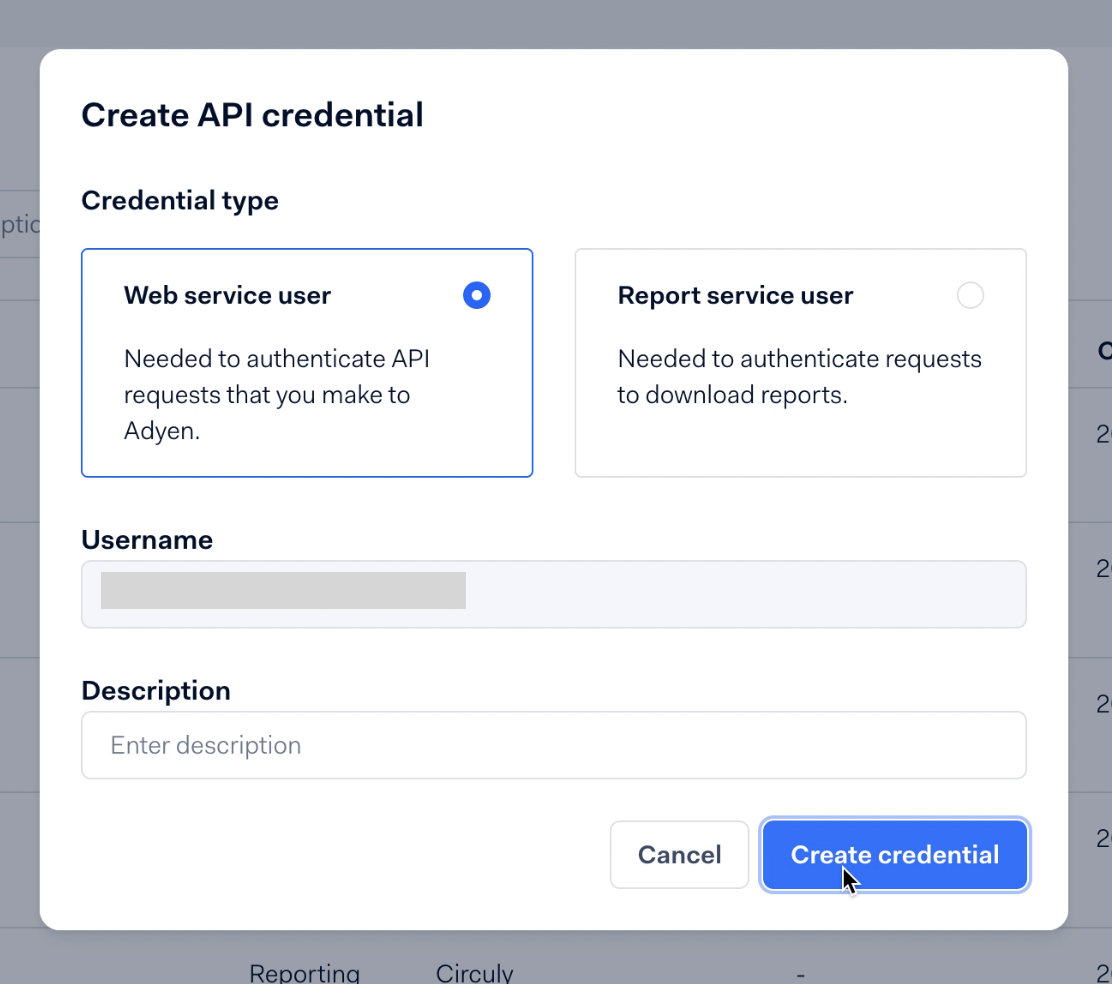
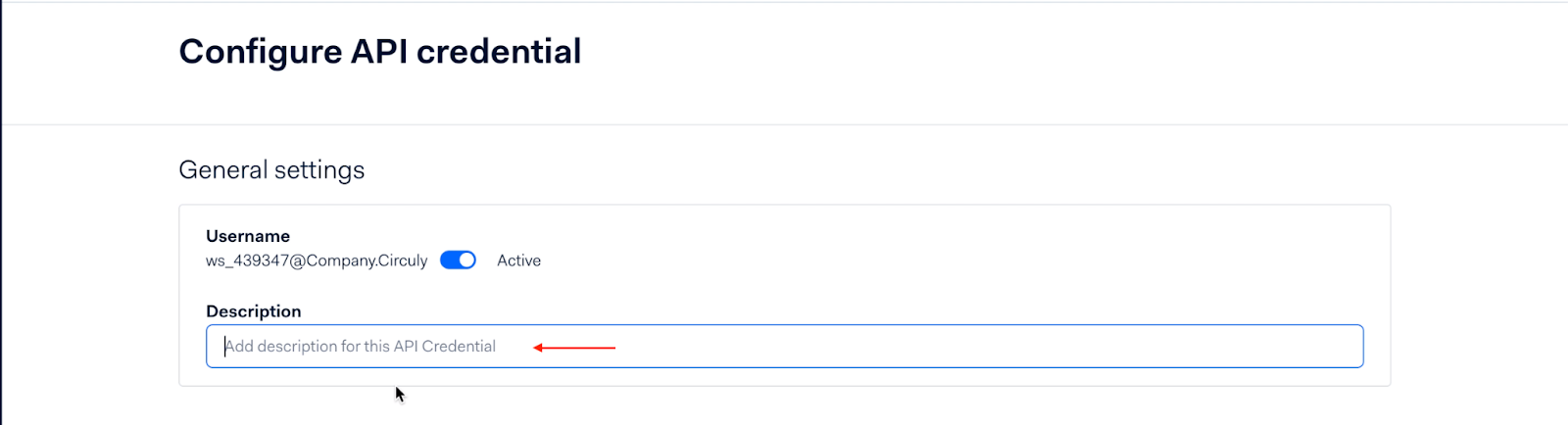
- In the Configure API credential window > Start with adding a Description (for example ref. circuly)
- In the same window > Scroll down to Server settings > Switch to the API key tab > Click on the Generate API key button (if the field is blank.) > And finally copy the keys by clicking on the copy/paste icon.
If the API keys field has a value then copy the keys by clicking on the copy/paste icon.

- Then go back to your circuly Hub > Click on the Settings tab > From the settings menu select Setup & Design > Checkout setup > Paste the copied API keys in the Adyen API key input field.

- After pasting the API keys > Go back to you Adyen account > Scroll down to Client settings > Switch to the Client keys tab > Click on the Generate client key button (if the field is blank.) > And finally copy the keys by clicking on the copy/paste icon.
If the Clint keys field has a value then copy the keys by clicking on the copy/paste icon.
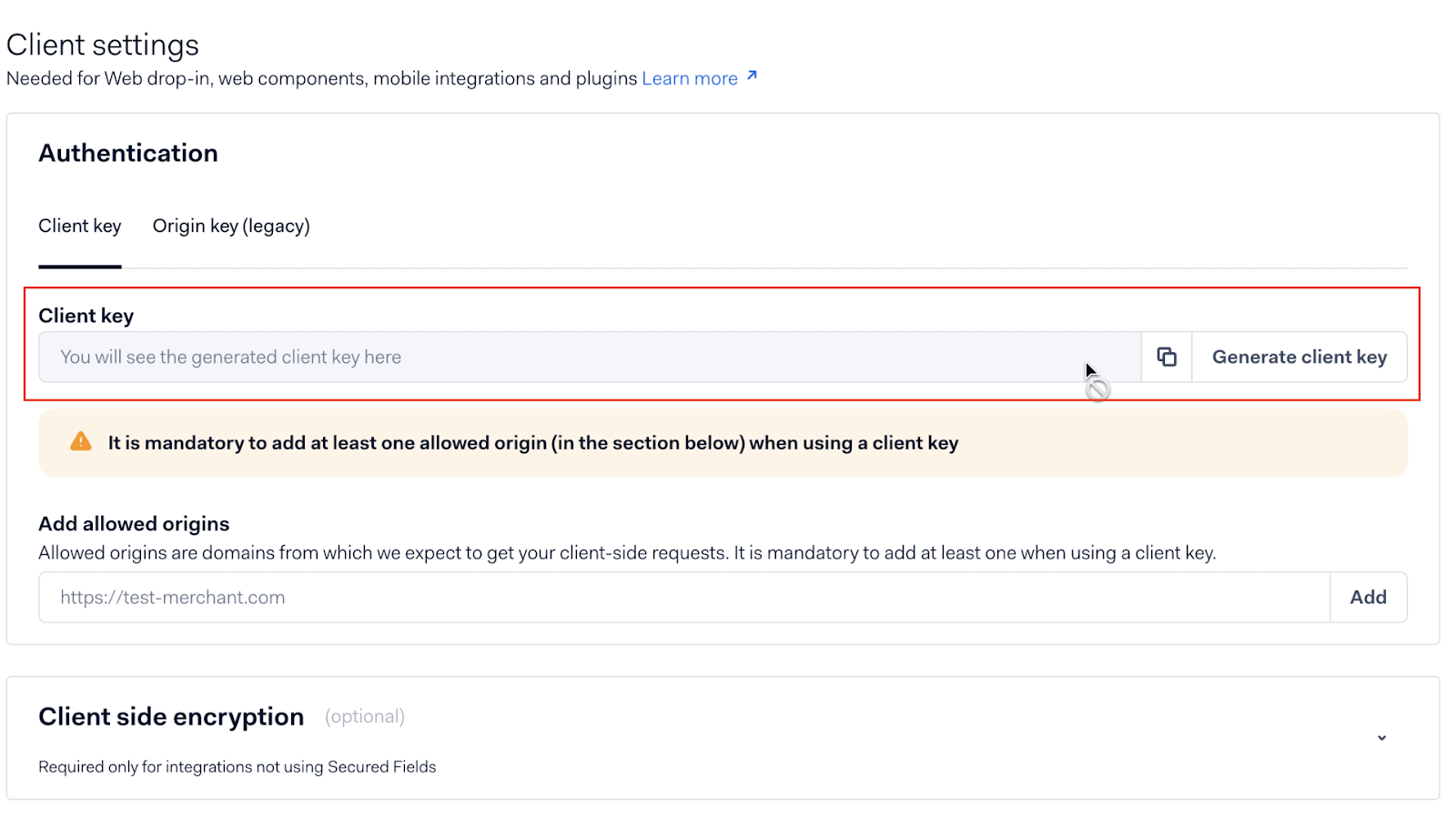
- Go to the circuly operations backend > In the Design & Setup settings > Scroll down to SHOPSYSTEM - ADYEN > Paste the copied Client keys in the Adyen Client key input field.
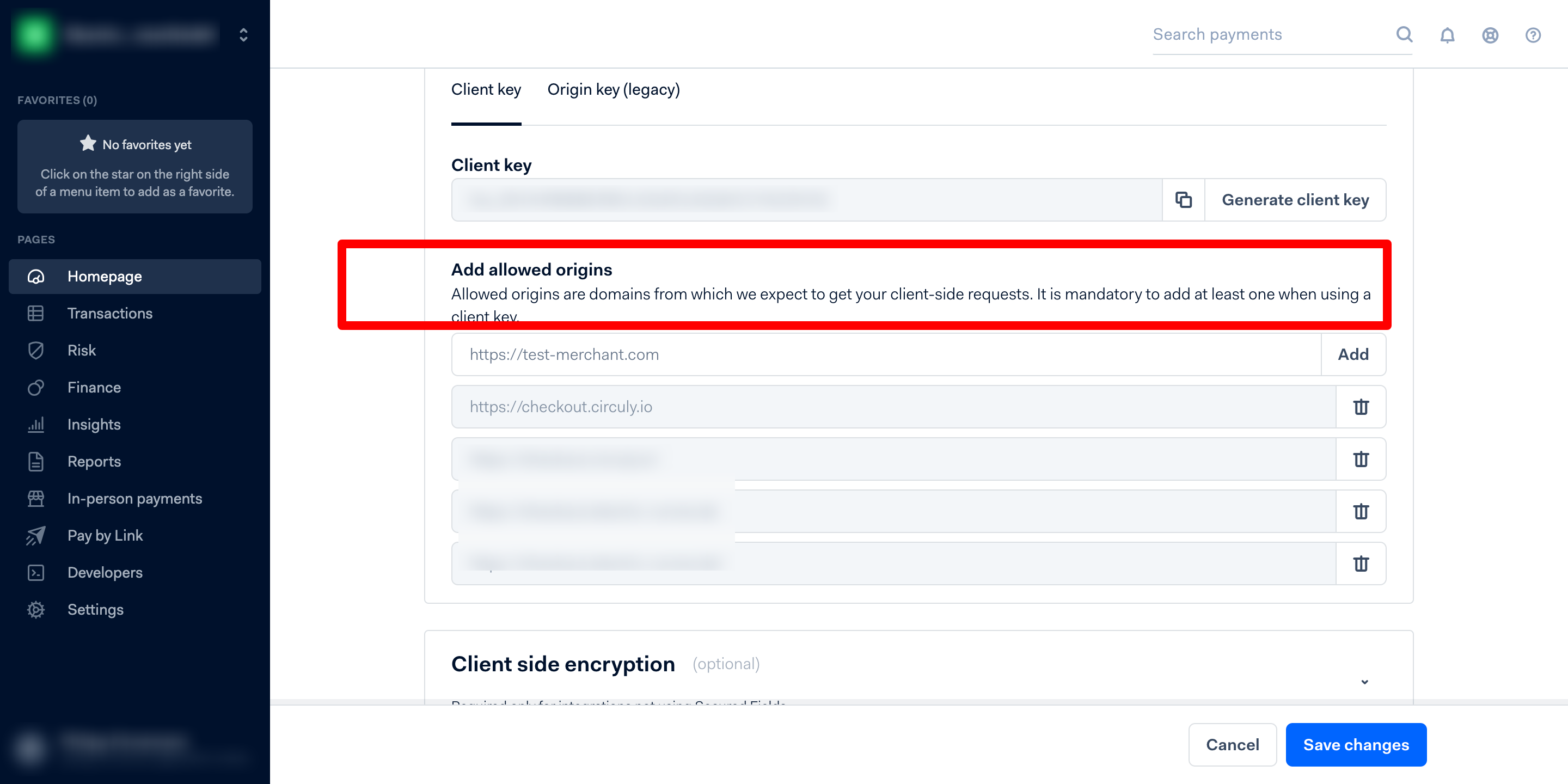
- After pasting the client keys > Go back to your Adyen account > Add allowed origins > Add our checkout URLs (PROD & DEV).
- Navigate to Developers in the left navigation bar > Click on Webhooks.
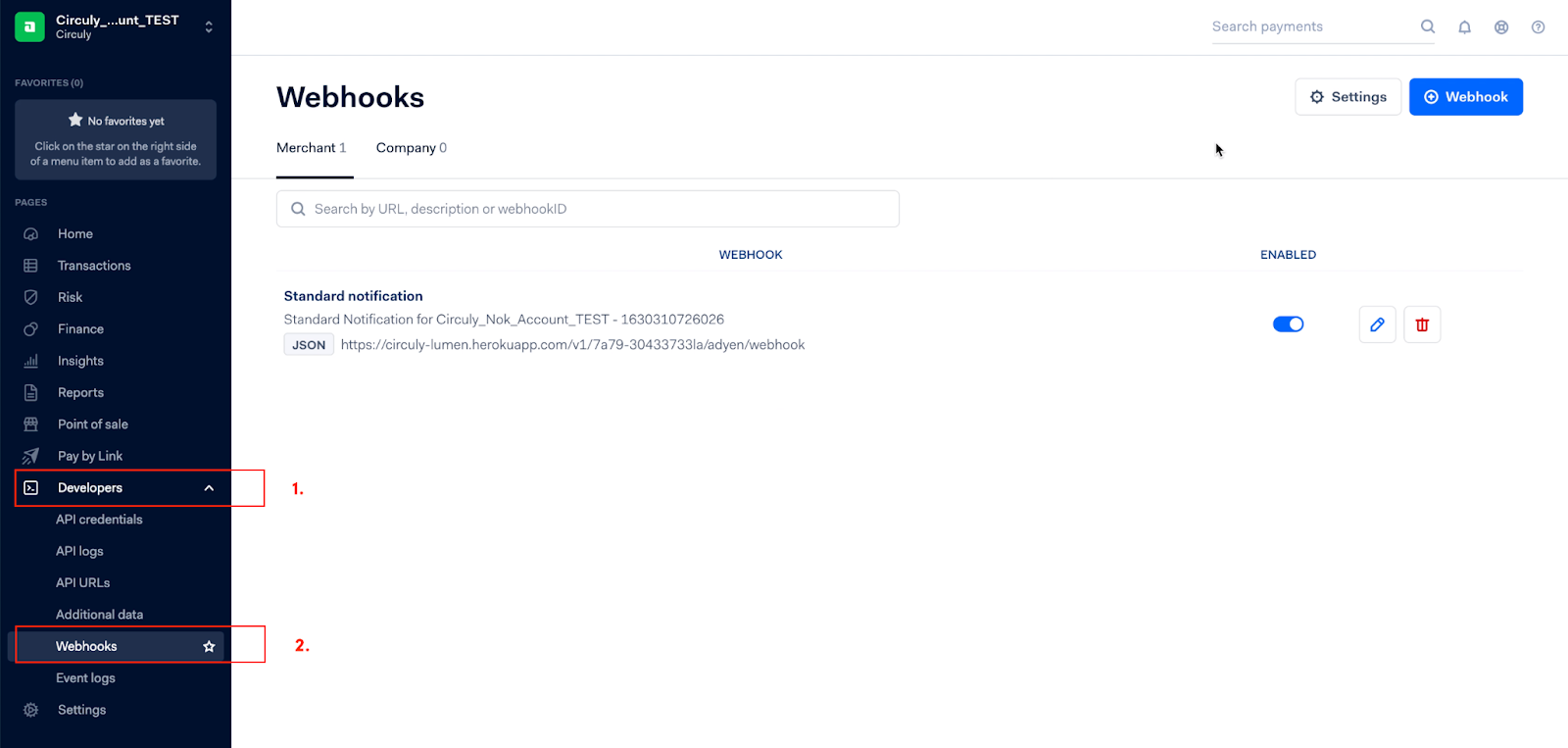
- In the Webhooks window > Click on the button that says Webhook (see the image below for reference).

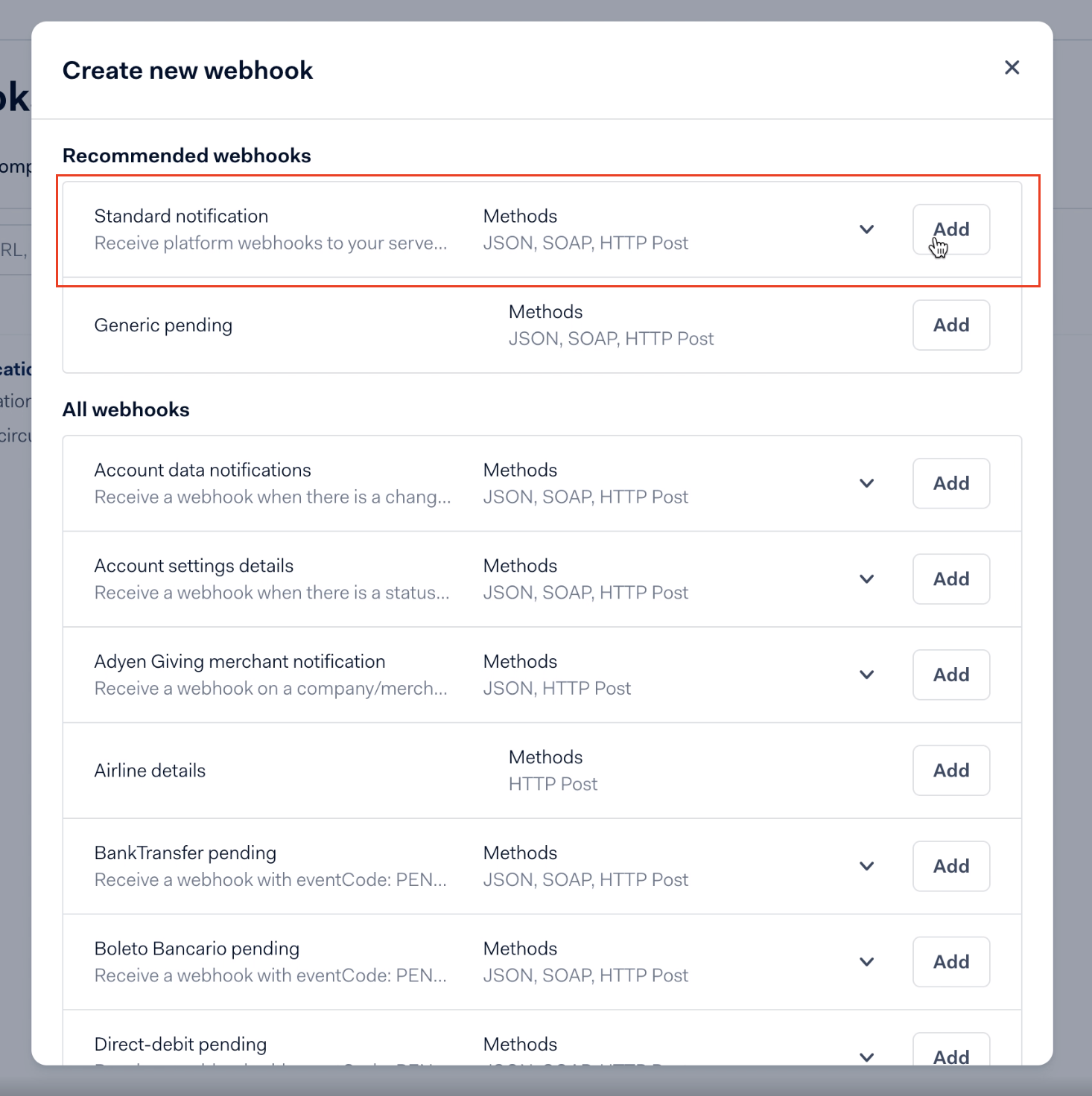
- In the Create new webhook window > Select Standard notification under Recommended webhooks by clicking on the Add button.
- In the Standard notification window > Add a meaningful description in the Description input field.
- In the Server configuration input field please set:
URL: Add the webhook server URL provided by circuly.
Method: JSON
Encryption Protocol: TLSv1.2
Click on Apply

- Then scroll down to Security > Expand HMAC keys by clicking on it > Click on Generate > Copy the keys by clicking on the copy/paste icon.
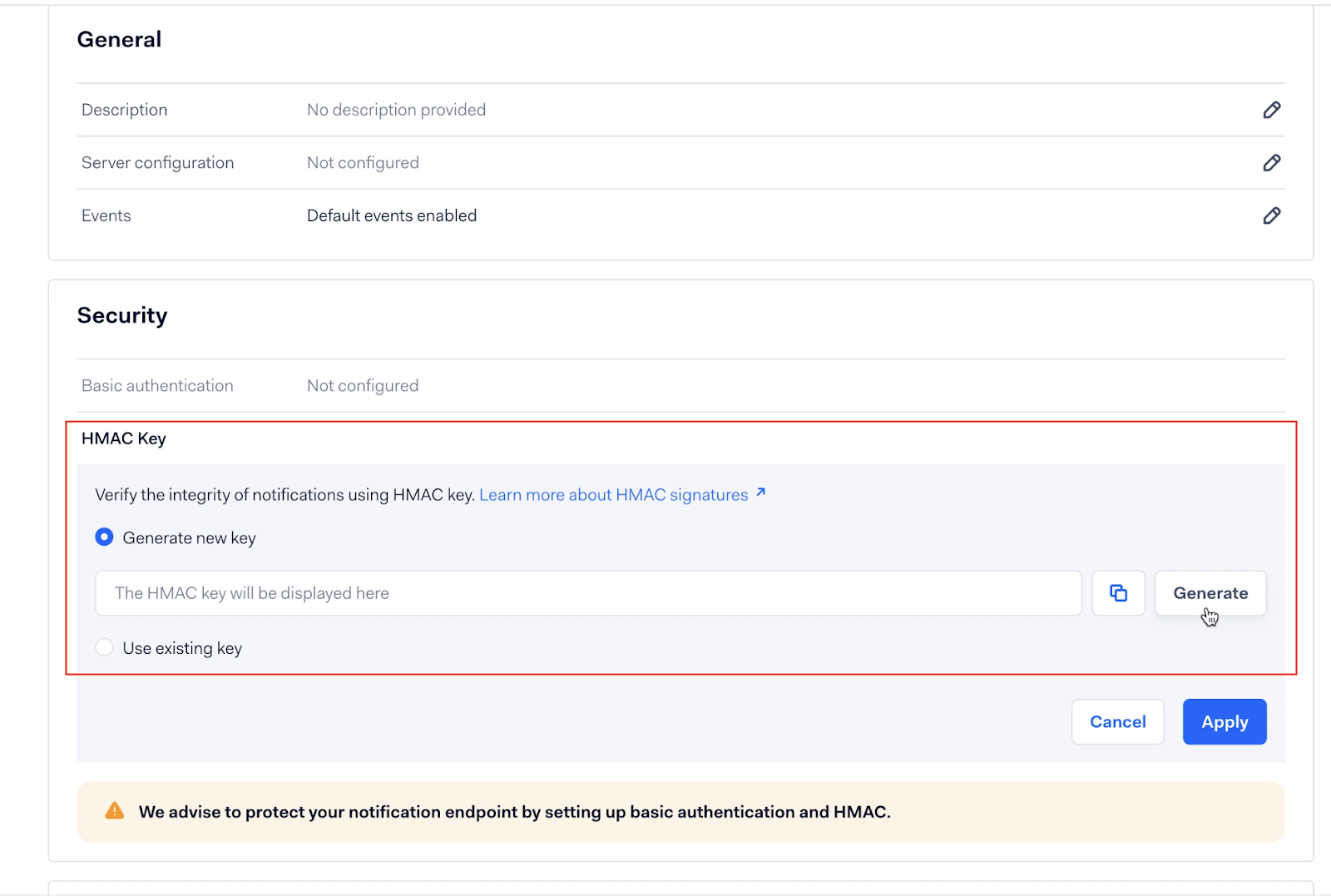
- After copying the keys > Go back to the circuly Operations Backend > Paste the copied HMAC keys in the HMAC generated by webhook input field.

- Return to your Adyen Account > Go to Settings > Account Settings > Under General set the Capture delay setting to Manual.

- The last task on the list is to add the Merchant name for which you need to go back to your Adyen account > Click on your Profile icon on the top left > Click on the copy/paste icon to copy your merchant name.
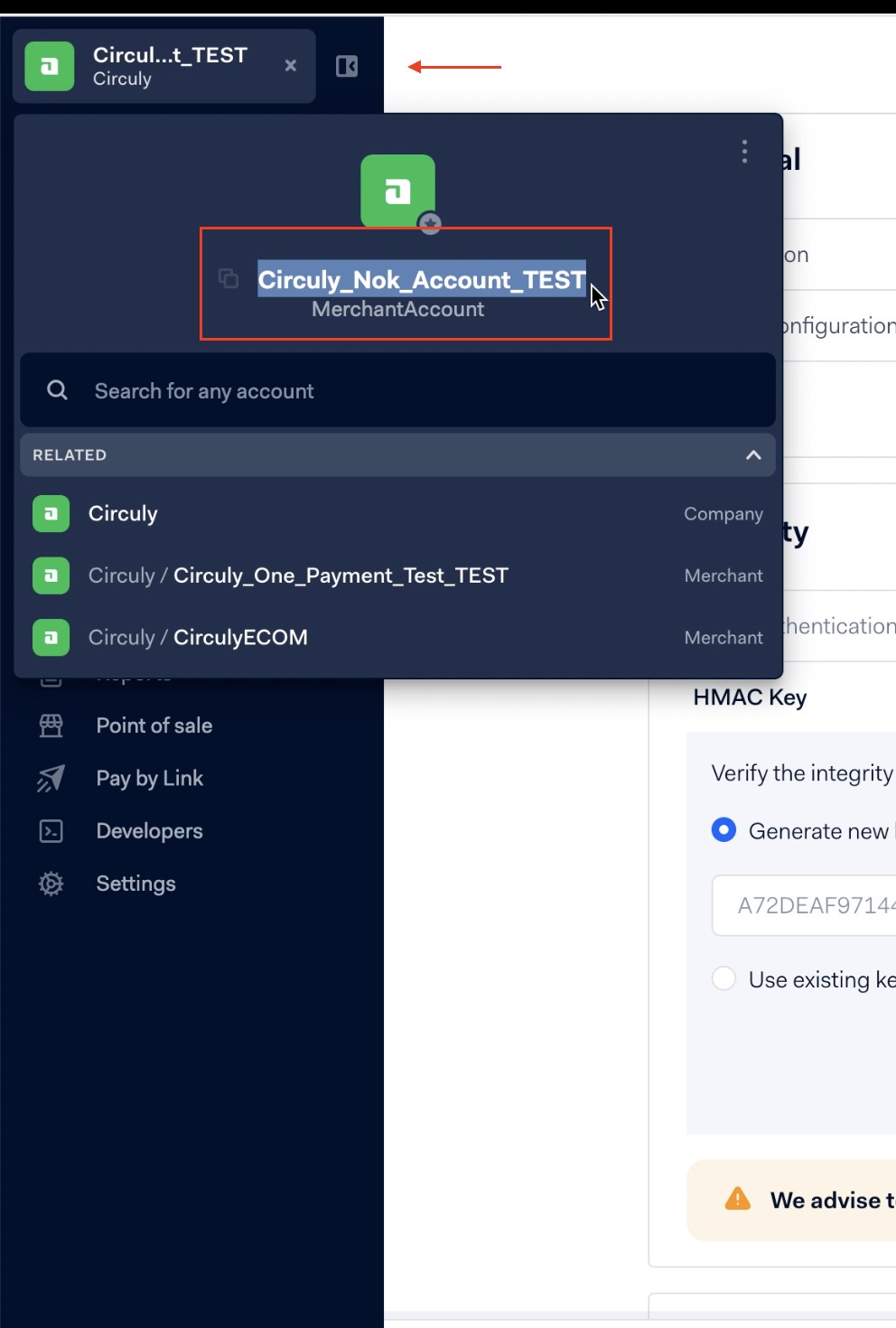
- Go back to the circuly Hub > Paste the copied Merchant name in the Merchant name input field.

Your Adyen account is now connected to circuly.